By Laurel Glassman
Laurel is an amateur Egyptologist and member of the Washington, DC chapter.
With exquisite Spanish Colonial architecture, jaw-dropping active volcanoes, great museums, and welcoming people, Nicaragua should be on any traveler’s list of places to visit. Spend a week or two in this charming Central American country of 6.9 million people. Aptly nicknamed the “Land of Fire and Water,” or more prosaically, the “Land of Lakes and Volcanoes,” it has both of these features in impressive abundance.
Getting There
There are nonstop flights to Managua from Miami, Fort Lauderdale and Houston on United Airlines and Avianca. Flights from Europe require one or more stops. Managua is reachable from San José, Costa Rica or Tegucigalpa, Honduras, in about 9-10 hours by bus.
Money
The local currency is the Nicaraguan córdoba (NIO). USD are widely accepted, especially in major cities and tourist areas. Always bring new bills if possible, but expect change in córdobas. Major credit cards are accepted in the main cities, tourist areas, hotels, and restaurants.
Places to Stay
There are wonderful hotels in all price ranges in the main cities. The Real Intercontinental Metro Centro is a true oasis in Managua; the El Convento hotel is an excellent choice in León, and the Hotel Boutique Adela in Granada is lovely and well-located.
Food and Drink
There are ample restaurant choices in all the main cities, such as Cocina de Doña Haydeé in Managua, Qué Sabroso and Casa Marimba in Masaya, Tacubaya in León, and Restaurante El Zaguán in Granada.
Getting Around
The most efficient way to see Nicaragua is by car. Principal highways tend to be in good condition, but the secondary roads are in poor repair, road signs tend to be nonexistent, and local drivers can be aggressive. GPS is essential. Vapues Travel can provide private car transportation with a driver and/or guide.
Things to See and Do
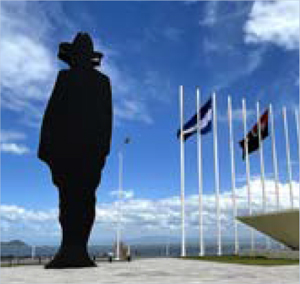
Managua: Managua’s Plaza de la Revolución and the Rubén Darío Monument showcase Nicaragua’s revolutionary history. Perhaps its most famous landmark is the gigantic monument to revolutionary hero Augusto Sandino in Loma de Tiscapa Park. Other excellent sites include the Brutalist-style Metropolitan Cathedral, the National Palace, the National Museum of Nicaragua, the House of the People, and the Archeological Museum. The ubiquitous “Trees of Life” — brightly-colored metal sculptures with curlicued branches (designed by First Lady Rosario Murillo) — are a must-see, especially along the waterfront.
León/Environs: León Viejo is one of the oldest Spanish colonial settlements in the Americas and a UNESCO World Heritage Site. The views of Momotombo Volcano are spectacular. León’s majestic Catedral de León is the largest in Central America — a showstopper, with wonderful views from its rooftop to eight volcanoes. The Museo de Arte Fundación Ortiz-Gurdián, Nicaragua’s finest museum of contemporary art, is not to be missed; the same goes for the Museo Histórico de la Revolución. The Iglesia de San Francisco (1639) is an impressive national heritage site, along with the Iglesia de la Merced (1615). Given Rubén Darío’s fame and ubiquity, his house in León is worth a visit.
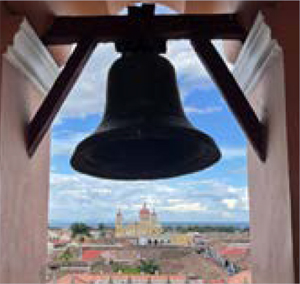
Granada: The boldly colored Catedral de Nuestra Señora de la Asunción dominates the city skyline. The Centro Cultural Antiguo Convento San Francisco is a fabulous museum filled with treasures from prehistory onward. The Choco Museo & Café is, not surprisingly, a delicious treat.
Volcán Masaya’s pool of shimmering lava makes it the perfect place to visit at night. The entire Masaya region offers a variety of music, dance, delicious food, a variety of workshops, and harming handicrafts.
No visit to Granada would be complete without a short trip to “Monkey Island” on Lake Nicaragua; the resident capuchin monkeys are always happy to interact.